Septic Tank Pumping in Bakersfield
Septic tank pumping service in Bakersfield and nearby towns. Learn the warning signs, how the work is done, and how local soil affects pumping frequency.
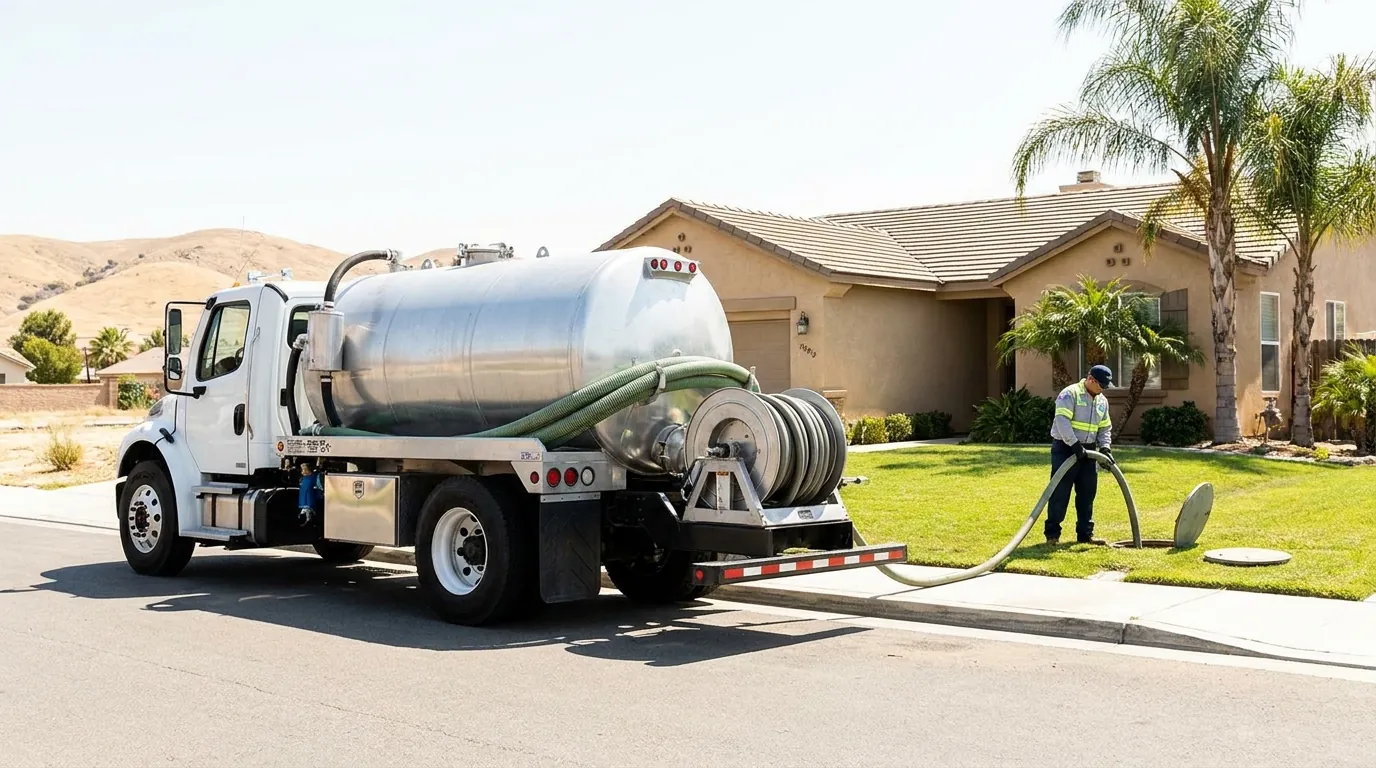
Why pumping matters here
A septic tank works by settling. Solids drop to the bottom as sludge, grease and lighter material float to the top as scum, and the relatively clear liquid in the middle flows out to the drain field. Over time the sludge and scum layers grow until there is no room left for that settling to happen. When that point arrives, solids start washing out toward the drain field, where they clog the soil and shorten the life of the most expensive part of your system. Routine septic tank pumping is what prevents that.
This is our core septic tank pumping service, and it is the single most cost-effective thing a Bakersfield homeowner can do to protect a septic system. Around here, the right pumping interval is not a fixed number. Bakersfield's dry summers concentrate household wastewater because there is little groundwater dilution, and the variable soils across the valley floor mean some drain fields drain freely while others hold water and stress the tank. That is why we look at your household size, tank size, and where you live before we tell you when to come back.
If you are not sure whether your tank is due, a quick septic system inspection measures your sludge and scum layers so you are pumping on evidence, not guesswork.
What a pumping visit involves
A standard pumping visit is straightforward, but doing it correctly protects your tank and drain field.
-
Locate and open the tank
We find the tank and expose the access lids. Many Bakersfield homes have risers at grade; older properties may have lids buried under soil or landscaping that we uncover so both compartments can be reached.
-
Measure the layers
Before pumping, we check the depth of the sludge and scum. This tells us whether your current interval is right and gives you a baseline for planning the next visit.
-
Pump both compartments
We pump the full tank, not just the liquid on top. Removing the settled sludge from the bottom is the whole point; skimming only the liquid leaves the problem behind.
-
Inspect what we can see
With the tank empty we look at the inlet and outlet baffles, the tank walls, and any effluent filter. Cracked baffles or a missing filter are common findings that we flag before backfilling.
-
Backfill and note the date
We close the tank securely and give you the measurements and a suggested return window based on how full it was.
How Bakersfield conditions change the job
Soil is the biggest variable. In parts of Greenacres and out toward East Niles, sandy and silty soils percolate quickly, which usually means the drain field keeps up and the tank fills at a predictable rate. In lower, tighter clay soils, effluent leaves the tank more slowly, backpressure builds, and solids get stirred rather than settling cleanly. Those systems often need more frequent pumping even with the same household use.
Water table matters too. During wet winters, a high water table around low-lying areas can push into the drain field and slow everything upstream. A tank that seemed fine in August can back up in February. We factor the season into our recommendations, and if your yard shows signs of a struggling field, we will point you toward drain field service rather than pumping the same tank over and over.
Household habits are the third factor. A garbage disposal, a large family, or frequent guests all add solids faster. If you have questions about intervals, our guide on how often to pump a septic tank walks through the math for local homes.
Ready to schedule a pumping?
Call to book septic tank pumping in Bakersfield or any of the nearby towns we serve. Tell us your household size and roughly when the tank was last pumped, and we will help you plan the right interval.
Serving Bakersfield, La Cresta, Potomac Park, Hillcrest, Greenacres, Oildale, and East Niles.
Frequently asked questions
How do I know when my septic tank needs pumping?
Common signs are slow drains throughout the house, gurgling in the plumbing, odors near the tank or drain field, and standing water or lush grass over the field. The most reliable method is measuring the sludge and scum layers, which we do at every visit and during an inspection.
How often should a Bakersfield home pump its septic tank?
Many households fall in the two-to-five-year range, but the right interval depends on tank size, number of people, and how well your local soil drains. Fast-draining sandy soils and small households stretch the interval; tight clay soils and large families shorten it.
Does pumping remove everything from the tank?
A proper pumping empties both the liquid and the settled sludge and scum from the whole tank. Skimming only the liquid leaves the solids that actually cause drain field failure, so we pump the tank fully.
What drives the cost of septic tank pumping?
Tank size, how full it is, access to the lids, and whether risers are installed all affect the work involved. Our article on septic tank pumping cost in Bakersfield explains the main factors without quoting a one-size price.