Septic Emergency Service in Bakersfield
Septic emergency service in Bakersfield for backups, overflows, and alarms. Know what to do first and how urgent pumping stops the mess from spreading.
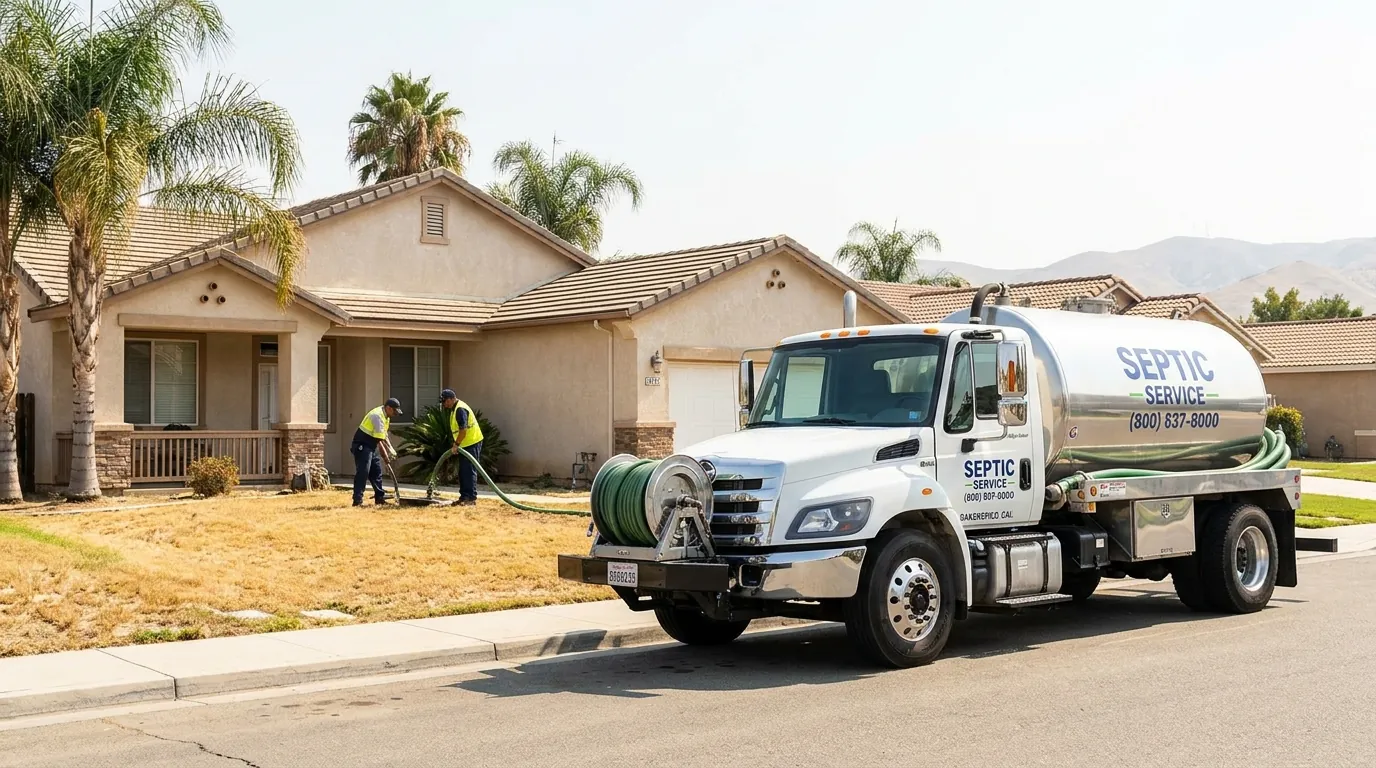
When a septic problem becomes an emergency
Some septic issues can wait for a scheduled visit. Others cannot. Sewage backing up into tubs, toilets, or floor drains, an overflowing tank, wastewater pooling in the yard, or a septic alarm that will not clear are all situations that get worse by the hour. Left alone, they turn into property damage and a health hazard.
The immediate goal in an emergency is to stop the flow into a system that cannot accept it. Stop using water in the house right away: no laundry, dishwasher, or long showers, and limit flushing. Reducing what goes in buys time and keeps the backup from spreading while help is on the way.
Most emergencies come down to a tank that has no room, a blockage between the house and the tank, or a drain field that cannot accept water. Emergency pumping relieves a full tank fast; from there a septic system inspection finds the underlying cause so it does not repeat. If the field is the problem, drain field service is the follow-up.
What to do, and what we do
A clear response limits the damage and gets you back to normal faster.
-
Stop water use
Turn off appliances that drain into the system and keep flushing to a minimum. This is the single most helpful thing you can do before we arrive.
-
Keep people and pets clear
Treat backed-up sewage and yard overflow as a health hazard. Keep everyone away from the affected area.
-
We relieve the system
In most emergencies, pumping the tank down immediately relieves the pressure and stops the backup, giving us room to work on the cause.
-
We find the cause
Once the immediate crisis is handled, we determine whether the trigger was a full tank, a blockage, a failed baffle, or a saturated drain field.
-
We recommend the fix
You get a clear explanation of what caused it and what will keep it from happening again, from a pumping schedule to field work.
Why Bakersfield sees seasonal spikes
Septic emergencies here are not random. Bakersfield's dry summers concentrate wastewater and let solids build quietly, so a tank that has been stretched too long finally backs up during a busy weekend. Then winter rain arrives and the pattern flips: a rising water table saturates drain fields, effluent has nowhere to go, and systems that seemed fine in August overflow in a wet week.
That seasonal swing is why so many wet-weather emergencies are really drain field problems. If your system backs up mostly during or after rain, the field is likely near its limit, and our guidance on septic care during heavy rain explains how to reduce the load before it fails.
The best emergency is the one that never happens. Staying current with septic tank pumping prevents the majority of backups, because a tank with room rarely overflows. But when something does go wrong, calling early, before the mess spreads, keeps the cost and damage down.
Have a septic emergency?
If sewage is backing up, your tank is overflowing, or a septic alarm won't clear, stop using water and call right away for emergency service in Bakersfield and nearby towns.
Emergency response across Bakersfield, La Cresta, Potomac Park, Hillcrest, Greenacres, Oildale, and East Niles.
Frequently asked questions
What should I do first during a septic backup?
Stop using water immediately, no laundry, dishwasher, or long showers, and keep flushing to a minimum. This slows the backup and prevents it from spreading while help is on the way, then call for emergency service.
Is sewage backup dangerous?
Yes. Backed-up sewage and yard overflow carry health risks, so keep people and pets away from the affected area and avoid contact until it has been cleaned up properly.
Will emergency pumping fix the problem for good?
Pumping relieves the immediate crisis and usually stops the backup, but it treats the symptom. An inspection afterward identifies whether a blockage, failed baffle, or saturated drain field caused it so it does not repeat.
Why do so many backups happen after rain in Bakersfield?
Winter rain raises the water table and saturates drain fields, leaving effluent nowhere to go. A system that backs up mainly in wet weather usually has a field that is near its capacity.