Drain Field Service in Bakersfield
Drain field service in Bakersfield. Spot a failing leach field early, understand the causes, and learn what can restore drainage before full replacement.
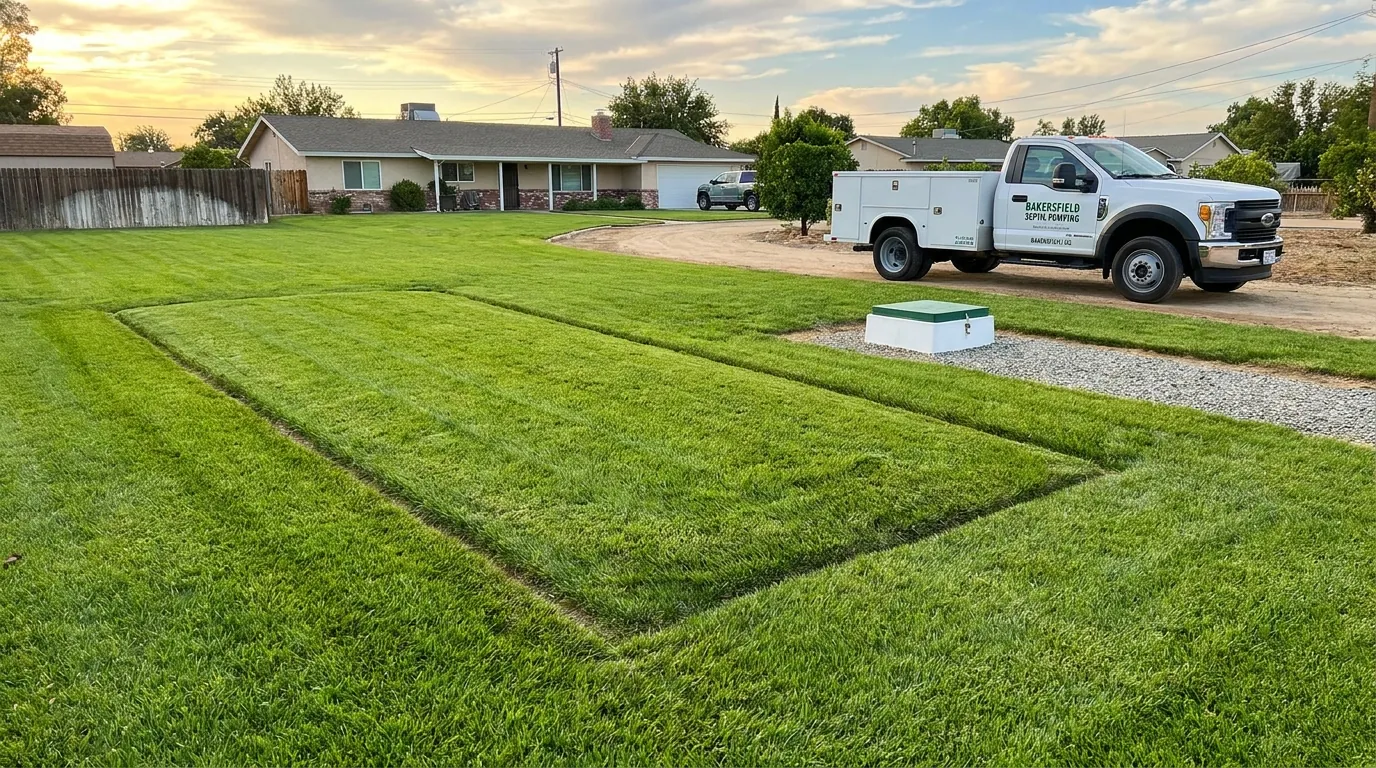
Why the drain field is the part to protect
The drain field, or leach field, is where treated liquid from your tank soaks into the soil. It is also the part that is slow and costly to replace, and it fails quietly. By the time you see standing water, spongy ground, or unusually green grass over the field, damage has usually been building for a while. Odors outdoors, gurgling drains, and sewage backing up after heavy use are other warning signs.
Most drain field failures trace back to the tank. When a tank is not pumped often enough, or a baffle fails, solids wash into the field and clog the soil so it can no longer accept water. That is why the cheapest drain field protection is regular septic tank pumping and periodic septic system inspection. Once the soil is clogged, options narrow.
Drain field service covers assessing the field, relieving what can be relieved, and giving you an honest read on whether the field can recover or is failing.
What drain field service involves
Every field is different, so the work starts with figuring out why it is struggling.
-
Confirm the tank is not the cause
We check the tank first. A full tank or failed baffle overloads the field, and pumping or repairing the tank sometimes relieves the symptoms without touching the field itself.
-
Assess the field
We look for saturation, ponding, and odors, and evaluate how the field is accepting water. This tells us whether the soil is overloaded, clogged, or affected by the water table.
-
Relieve and clear
Depending on the cause, we address blockages between the tank and field and reduce the load reaching the soil so it has a chance to recover.
-
Explain your options
We give you a straight assessment of whether the field can bounce back with better habits and pumping, or whether it is reaching the end of its life.
How Bakersfield soil and water shape drain field trouble
Soil is everything for a drain field, and Bakersfield's soils vary sharply from neighborhood to neighborhood. Sandy, fast-draining ground in areas like Greenacres and East Niles generally accepts effluent well, but a field sized for a smaller household can still overload as a family grows. Tight clay soils in lower areas drain slowly, so those fields sit closer to their limit and fail sooner when overloaded.
The seasonal water table is the other major factor. Bakersfield's dry summers can make a marginal field look fine, then winter rain raises the water table and the field has nowhere to send water. Fields that back up only in the wet season are usually telling you they are close to capacity. Our notes on septic care during heavy rain explain how to reduce the load during those weeks.
The most important thing a homeowner can do is not overload a struggling field. Spreading out laundry, fixing leaks, and staying current on pumping all buy time. When a field is truly failing, we will tell you plainly rather than sell you repeated visits.
Concerned about your drain field?
If you see standing water, smell odors outside, or your system backs up under heavy use, call to have the field assessed in Bakersfield or a nearby town before the problem grows.
Serving Bakersfield, La Cresta, Potomac Park, Hillcrest, Greenacres, Oildale, and East Niles.
Frequently asked questions
What are the first signs of a failing drain field?
Standing water or spongy ground over the field, unusually green grass, outdoor odors, gurgling drains, and backups after heavy water use. These often appear gradually, so early attention matters.
Can a clogged drain field be saved?
Sometimes. If the cause is an overloaded or full tank, relieving that load can let the soil recover. If solids have deeply clogged the soil or the field is at the end of its life, recovery is limited, and we will give you an honest assessment.
How do I keep my drain field healthy?
Pump the tank on schedule, keep an inspection routine, avoid flushing solids and grease, fix leaks, and don't drive or build over the field. Reducing water load during wet weather also helps in Bakersfield's rainy months.
Why does my field only back up in winter?
A high seasonal water table after rain leaves less room in the soil for effluent. A field that only struggles when it's wet is usually near its capacity, and a summer inspection may not reveal it.