Septic Tank Cleaning in Bakersfield
Septic tank cleaning in Bakersfield removes the sludge and scum that pumping alone can leave behind, protecting your drain field and restoring capacity.
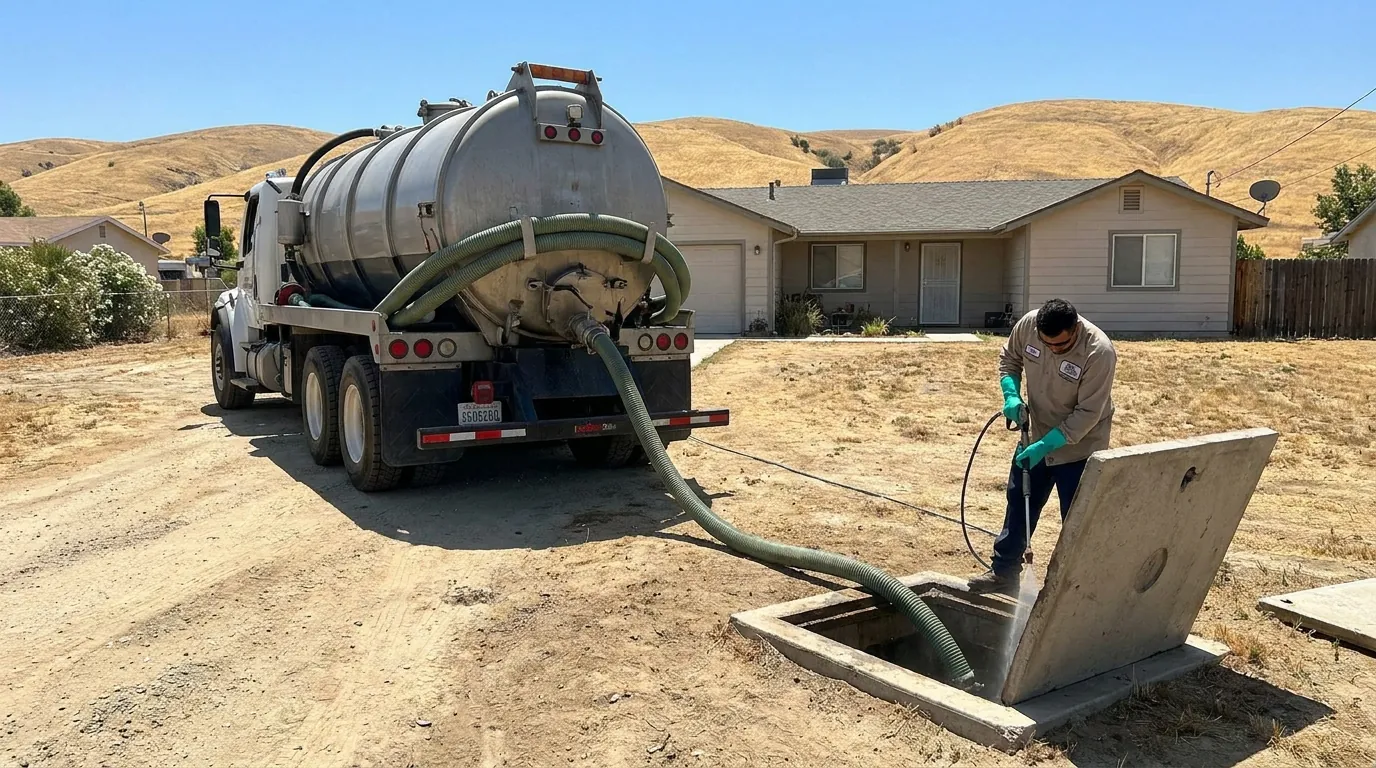
Cleaning versus pumping
People use the terms interchangeably, but there is a real difference. Pumping removes the liquid and the loose solids from the tank. Cleaning the septic tank goes further: it breaks up and removes the compacted sludge that settles and hardens at the bottom, along with the scum crust that can cling to the walls and baffles. Over years, that hardened layer takes up capacity that pumping alone does not reclaim.
Cleaning a septic tank matters most in Bakersfield when a tank has gone a long time between services, when a household adds solids quickly, or when an inspection shows heavy buildup. Our long dry summers concentrate wastewater, and concentrated solids compact harder, so tanks here can develop stubborn bottom layers that a routine pump-out leaves in place.
For many homes, regular septic tank pumping on the right schedule keeps things clean enough. When it does not, a full cleaning resets the tank. A septic system inspection is the fastest way to tell which one you actually need.
How septic tank cleaning works
Cleaning of a septic tank is a step beyond pumping and takes more time and care.
-
Pump the tank down
We remove the liquid and floating solids first so we can reach the compacted material underneath.
-
Break up the sludge
The hardened bottom layer is agitated and loosened so it can be drawn out rather than left behind to keep shrinking your usable capacity.
-
Clear the walls and baffles
Scum and buildup around the inlet, outlet, and effluent filter are cleared so wastewater flows and settles the way the tank was designed to.
-
Inspect the empty tank
With everything removed we can see the tank interior clearly and flag any cracks, corrosion, or baffle damage that needs attention.
-
Close up and advise
We secure the lids and recommend a realistic pumping interval so the buildup does not return as quickly.
Local conditions and buildup
Soil and water conditions across the Bakersfield area shape how fast a tank needs a deeper cleaning. In tight clay soils where effluent leaves slowly, solids stay in the tank longer, compact more, and are harder to remove later. Homes on faster-draining ground in Greenacres or East Niles often stay cleaner between visits, but a long gap between services still lets the bottom layer harden.
Water use patterns play in too. During dry stretches, less dilution means denser sludge. A tank that has been stretched several years past its ideal interval is a strong candidate for cleaning rather than a simple pump. If cleaning reveals that solids have already migrated toward the field, we will discuss drain field service as the next step.
If you are trying to figure out how long you can safely go between services, our guide to the signs your septic tank is full covers what to watch for at home.
Schedule septic tank cleaning
If your tank has gone years without service or an inspection shows heavy buildup, call to arrange a full septic tank cleaning in Bakersfield or a nearby town.
Serving Bakersfield, La Cresta, Potomac Park, Hillcrest, Greenacres, Oildale, and East Niles.
Frequently asked questions
What is the difference between pumping and cleaning a septic tank?
Pumping removes the liquid and loose solids. Cleaning also removes the compacted sludge that hardens at the bottom and the scum clinging to the walls and baffles, restoring capacity a routine pump-out leaves behind.
How often does a tank need a full cleaning?
Most tanks on a regular pumping schedule rarely need a deep cleaning. Tanks that have gone many years without service, or that show heavy buildup on inspection, are the usual candidates.
Will cleaning fix a slow-draining system?
If the slowness comes from a full or fouled tank, cleaning often helps. If solids have already clogged the drain field, cleaning the tank alone will not restore drainage, which is why we inspect before recommending it.
Does dry Bakersfield weather affect buildup?
Yes. Long dry periods concentrate wastewater, so solids compact harder and can be more difficult to remove. That is one reason local tanks left too long between services can develop stubborn bottom layers.